


In 2026, eCommerce success is no longer driven just by traffic, it’s driven by relevance. You can bring thousands of users to your online store, but if your experience fails to connect with them in the first few seconds, they’ll leave without hesitation.
This is where eCommerce personalization becomes a growth lever, not just a UX enhancement.
Let’s break down what bounce rate really means today, why it’s rising for many eCommerce brands, and how modern, AI‑powered personalization can dramatically reduce bounce rates while improving conversions and customer lifetime value.
TL;DR
In 2026, high eCommerce bounce rates are less about traffic quality and more about lack of relevance. Users decide whether to stay or leave within milliseconds, and generic, one-size-fits-all experiences no longer work.
eCommerce personalization powered by AI and real-time behavioral data helps reduce bounce rates by showing users the right products, content, offers, and messages at the right moment. From personalized homepages and smart search results to dynamic product recommendations, exit-intent offers, and AI chat support, personalization keeps users engaged and moving toward conversion.
The more understood a visitor feels, the longer they stay and the more likely they are to convert. In short, personalization is no longer optional; it’s essential for sustainable eCommerce growth.
What Is Bounce Rate on an eCommerce Website?
Bounce rate on an eCommerce website refers to the percentage of visitors who leave after viewing only one page, without taking any meaningful action. A “meaningful action” typically includes:
-
Clicking to another page or category
-
Using on-site search
-
Viewing a product detail page
-
Adding a product to the cart or wishlist
-
Signing up, scrolling meaningfully, or engaging with content
In simple terms, bounce rate answers one critical question:
Did the visitor find enough value to continue their journey?
In 2026, this decision happens almost instantly. Multiple studies show that users form an impression of a website in under 100 milliseconds. If the page feels slow, irrelevant, confusing, or generic, users mentally reject it before consciously thinking about it.
It’s important to note that a bounce doesn’t always indicate poor traffic quality. Some users may find quick answers and leave. However, consistently high bounce rates in eCommerce almost always signal a mismatch between user expectations and the on-site experience.
This mismatch could be related to content relevance, product discovery, trust, performance, or personalization.
Why Do eCommerce Bounce Rates Increase in 2026?
User expectations in 2026 are no longer set by average online stores, they’re shaped by Amazon, Netflix, Google, Apple, and AI-first platforms. These brands have trained users to expect speed, relevance, personalization, and clarity by default.
When an eCommerce website fails to meet these expectations, visitors leave without hesitation.
The Most Common Reasons Behind Increasing eCommerce Bounce Rates Include:
-
Generic, non-personalized landing pages that treat every visitor the same
-
Poor mobile experience, accessibility gaps, or inconsistent layouts across devices
-
Confusing UI/UX, cluttered pages, and cognitive overload
-
Irrelevant or static product recommendations
-
Intrusive pop-ups and aggressive ads that interrupt intent
-
Slow page load speeds, especially on mobile networks
-
Misleading headlines or ad-to-page mismatch
-
Lack of trust signals, such as reviews, ratings, return policies, and security badges
-
Broken links, errors, or technical friction
-
Weak, unclear, or poorly placed calls-to-action (CTAs)
At its core, the problem isn’t traffic or marketing spend.
➥ The real issue is that the website does not adapt to the user.
And in a world where users expect relevance instantly, non-adaptive experiences lose attention fast.
👉 You may also like to read: Latest Conversion Rate Optimization (CRO) Trends to Follow in 2026 & Beyond
The Solution: eCommerce Personalization
In 2026, the most effective way to reduce eCommerce bounce rates is through intelligent personalization. Instead of presenting the same experience to every visitor, eCommerce personalization adapts the website in real time to match each user’s intent, behavior, and context. By delivering relevant products, content, and messages at the right moment, personalization removes friction, increases engagement, and encourages users to continue their journey rather than exit.
What Is eCommerce Personalization?
eCommerce personalization is the practice of dynamically tailoring the shopping experience—including content, product recommendations, offers, layouts, and messaging based on individual user behavior and intent.
eCommerce Personalization leverages data such as:
-
Browsing behavior and on-site interactions
-
Purchase and transaction history
-
Search queries and product affinity
-
Device type, location, and time of visit
-
Demographics and lifecycle stage
-
Engagement patterns across sessions
In 2026, eCommerce personalization is no longer rule-based alone.
It is powered by:
-
AI and machine learning models
-
Real-time behavioral signals
-
Predictive intent analysis
-
Context-aware decision engines
This allows brands to respond instantly to what a user is most likely to want right now, not just what they did in the past.
When eCommerce personalization is done right:
-
Users feel understood rather than targeted
-
Navigation feels intuitive instead of overwhelming
-
Product discovery becomes effortless
-
Bounce rates drop naturally as engagement rises
In short, eCommerce personalization transforms eCommerce from a static catalog into a responsive experience one that keeps users engaged, reduces bounce rates, and accelerates conversions.
Key Benefits of eCommerce Personalization in Reducing Bounce Rate
Effective eCommerce personalization is no longer just a UX enhancement, it’s a measurable growth driver. When personalization is executed with intent and intelligence, it directly impacts how long users stay, how deeply they engage, and whether they convert.
Brands using advanced personalization consistently see:
- Higher user engagement and longer session durations
- Significantly lower bounce and exit rates
- Improved conversion rates across devices
- Increased average order value (AOV) through relevant upsells
- Stronger brand trust and emotional loyalty
- Higher customer lifetime value (CLV) driven by repeat purchases
The common thread?
Personalized experiences make users feel understood and understood users don’t bounce.
eCommerce Personalization Strategies to Reduce Bounce Rates
Let’s explore practical, high-impact eCommerce personalization strategies that eCommerce leaders are using in 2026 to reduce bounce rates and increase conversions.
1. Personalize the Homepage Experience
Your homepage is the first impression and primary decision point for most visitors.
In 2026, top-performing eCommerce brands no longer show a static homepage. Instead, they dynamically adapt the experience based on user context and intent.
Modern homepage personalization includes:
- Serving different layouts and content to new vs returning users
- Highlighting trending, best-selling, or seasonal products for first-time visitors
- Resuming journeys for returning users by showing recently viewed, saved, or carted items
- Adapting banners, CTAs, and messaging based on traffic source, campaign, or referral intent
For new visitors, clarity is critical. Clean navigation, strong value propositions, trust badges, and popular categories help users orient themselves quickly.
For returning users, continuity reduces friction. Familiar products, remembered preferences, and contextual recommendations encourage deeper exploration instead of exits.
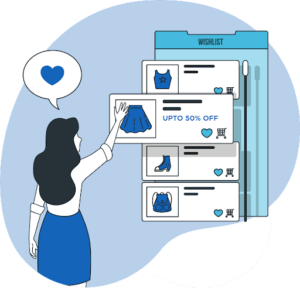
2. Recommend Categories and Products Based on Browsing History
Browsing behavior is one of the strongest intent signals in eCommerce personalization.
By analyzing what users view, hover over, scroll through, or interact with, brands can:
- Display recently viewed or high-interest categories
- Recommend similar or complementary products
- Reduce cognitive load and product discovery friction
When users immediately see products aligned with their interests, the experience feels effortless not overwhelming. This relevance dramatically reduces frustration-driven bounces.
3. Personalize Search Results With AI-Driven Smart Search
On-site search users typically have high purchase intent, making search personalization one of the most effective bounce-rate reducers.
In 2026, AI-powered smart search includes:
- Predictive autocomplete and intelligent query suggestions
- Personalized search results based on past behavior and preferences
- Visual and image-based product search
- Natural language queries such as “black running shoes under $100”
A fast, accurate, and personalized search experience helps users find what they want instantly — keeping them engaged and moving toward conversion instead of exit.
4. Use Dynamic Content and Contextual Messaging
Every visitor arrives with a different motivation, mindset, and expectation.
Dynamic content personalization allows brands to:
- Change banners, headlines, and CTAs in real time
- Show category-specific or intent-based offers
- Personalize messaging based on location, season, device, or lifecycle stage
- Trigger incentives for new users, returning users, or loyal customers
For example, a discount aligned with the category a user is browsing feels helpful and relevant — while generic offers often feel intrusive and increase bounce.
5. Personalize Product Pages and Segment Users
Product pages are where buying decisions are made and where personalization has the highest ROI.
Effective product page personalization includes:
- “Customers also bought” and “frequently bought together” recommendations
- Intelligent cross-sell and upsell suggestions
- Contextual social proof (reviews, ratings, popularity)
- Dynamic offers or pricing for loyal or high-value customers
User segmentation further enhances relevance.
Common segments include:
- New visitors
- Returning browsers
- First-time buyers
- Repeat or high-value customers
Each segment can receive tailored messaging, product recommendations, and follow-up communication reducing bounce-back behavior and increasing purchase likelihood.
6. Use Personalized Exit-Intent Offers and Smart Triggers
Exit-intent personalization is your final opportunity to retain a user before they leave.
In 2026, effective exit-intent strategies are contextual and restrained, including:
- Personalized discounts based on viewed products or categories
- Cart or wishlist reminders
- Lead capture offers aligned with user interest
- Helpful messages instead of aggressive pop-ups
When timed correctly, exit-intent personalization can recover abandoning sessions. When overused, it increases bounce making relevance and timing critical.

7. Offer Real-Time Assistance With Chatbots and Live Support
Conversational commerce is now a core part of eCommerce personalization.
AI-powered chatbots and live chat help by:
- Answering product, delivery, and policy questions instantly
- Guiding users through decision-making in real time
- Recommending products conversationally
- Reducing uncertainty and purchase hesitation
Personalized, real-time assistance builds trust and trust keeps users engaged longer, reducing bounce rates across the funnel.
Conclusion: Personalization Is the Foundation of Sustainable eCommerce Growth
High bounce rates are rarely random. They are clear behavioral signals.
Signals that visitors didn’t find what they were looking for fast enough, relevant enough, or intuitively enough.
In 2026, reducing bounce rates is no longer about driving more traffic, adding more pop-ups, or pushing deeper discounts. It’s about delivering relevance at every moment of the user journey. And that relevance is powered by eCommerce personalization.
To consistently reduce bounce rates and increase conversions, modern eCommerce brands must:
-
Understand user intent deeply using real-time behavioral and contextual data
-
Deliver personalized experiences across every touchpoint, from homepage to checkout
-
Leverage AI and machine learning responsibly to anticipate needs without overwhelming users
-
Build trust through transparency, accuracy, and relevance rather than aggressive tactics
When customers feel understood, they don’t rush to leave. When they stay longer, they explore more. And when the experience feels effortless and personal, conversions follow naturally.
But eCommerce personalization isn’t just about selling more products.
It’s about building long-term relationships, reducing friction, earning trust, and creating shopping experiences that customers genuinely want to return to again and again.
This is where having the right Conversion Rate Optimization (CRO) partner makes all the difference.
Tatvic is one of the leading CRO agencies helping eCommerce brands in 2026 reduce bounce rates, unlock higher conversion rates, and scale sustainably through data-driven experimentation, AI-powered personalization, and advanced analytics. With deep expertise across GA4, experimentation frameworks, and personalization engines, Tatvic helps brands turn user intent into measurable growth.
If you’re looking to reduce bounce rates, improve conversions, and build high-performing personalized eCommerce experiences: 👉 Connect with Tatvic’s CRO experts today and start turning relevance into revenue.