Hello There!

Lorem ipsum dolor sit amet, consectetur adipiscing elit,

Best & Top Conversion Rate Optimization (CRO) Agencies & Services in 2026

Best & Top Conversion Rate Optimization (CRO) Agencies & Services in 2026 - Tatvic

TL;DR

In 2026, rising customer acquisition costs, privacy-led data loss, and plateauing traffic have made revenue efficiency more critical than traffic growth. Conversion Rate Optimization (CRO) has evolved into a revenue engineering discipline that improves how businesses convert, retain, and monetize existing demand. Modern CRO services combine analytics, UX, behavioral science, experimentation, personalization, and AI to deliver compounding ROI that outperforms paid media over time.

The most effective CRO agencies focus on research depth, experimentation velocity, and revenue attribution rather than isolated tests. Among global Conversion Rate Optimization (CRO) agencies, Tatvic stands out as the top choice due to its analytics-first, revenue-driven, and scalable CRO frameworks that consistently deliver measurable business impact across industries and regions.

The Growth Problem No One Talks About in 2026

Digital growth in 2026 is constrained by structural realities rather than lack of opportunity. Customer acquisition costs continue to rise across paid channels, organic visibility is increasingly shaped by AI-driven search experiences, and privacy-first regulations have reduced attribution clarity across the funnel.

At the same time:

  • Traffic growth for most businesses has plateaued
  • Incremental ad spend delivers diminishing marginal returns
  • Most websites still convert only a small fraction of their visitors

This creates a compounding inefficiency where more money is spent to extract the same or lower value.

As a result, leading organizations are shifting focus from acquisition volume to revenue efficiency. Instead of asking how to bring more users, they are asking how to convert existing demand more effectively.

This shift has elevated Conversion Rate Optimization from a tactical marketing activity to a core growth lever. When implemented correctly, CRO acts as a profit multiplier improving performance across every channel without increasing acquisition costs.

What Conversion Rate Optimization Really Means in 2026

Conversion Rate Optimization in 2026 is no longer about superficial changes or one-off experiments. It has matured into a revenue engineering discipline that blends data, behavioral insight, and structured experimentation into a continuous optimization system.

Modern CRO focuses on:

  • Understanding user intent, hesitation, and motivation
  • Identifying friction across journeys, not just pages
  • Improving trust, clarity, and decision confidence
  • Linking experience improvements directly to revenue outcomes

Effective CRO integrates:

  • Advanced analytics and event modeling
  • UX and usability research
  • Behavioral psychology principles
  • Personalization and segmentation
  • AI-assisted insight generation

A critical differentiator today is CRO maturity. Organizations with mature CRO programs prioritize learning velocity, governance, and documentation, ensuring that insights compound over time instead of being lost after individual tests.

You may also like to read 👉 Latest Conversion Rate Optimization (CRO) Trends to Follow in 2026 & Beyond

Why Conversion Rate Optimization (CRO) Services Deliver Higher ROI Than Paid Media

One of the strongest business cases for investing in Conversion Rate Optimization services is ROI durability.

Paid media delivers linear returns when spend stops, results stop. CRO, by contrast, compounds.

Even small improvements in conversion rates positively impact:

  • Paid traffic
  • Organic traffic
  • Email and CRM programs
  • Direct and referral traffic

CRO directly improves:

  • Customer acquisition cost (CAC)
  • Lifetime value (LTV)
  • Payback periods
  • Contribution margins

CRO should be prioritized when:

  • CAC is increasing faster than revenue
  • Funnel drop-offs are high or unexplained
  • Lead quality is inconsistent
  • Attribution clarity is limited

In 2026, CRO does not replace paid media. It makes paid media economically sustainable.

Core Conversion Rate Optimization Services Explained

High-performing Conversion Rate Optimization agencies offer integrated, research-led services designed to drive measurable revenue outcomes not isolated improvements.

Core CRO services typically include:

Conversion & Funnel Audits

  • End-to-end analysis of user journeys across acquisition, activation, and conversion flows
  • Identification of friction points, cognitive overload, and trust gaps
  • Baseline performance benchmarking

User Research & Behavioral Analysis

  • Quantitative analysis using analytics, heatmaps, and session recordings
  • Qualitative research through surveys, usability testing, and feedback analysis
  • Behavioral segmentation to understand different intent groups

Hypothesis Creation & Prioritization Frameworks

  • Insight-led hypothesis generation grounded in data, not assumptions
  • Structured prioritization using impact, confidence, and effort scoring
  • Roadmap creation aligned with business KPIs

A/B & Multivariate Experimentation

  • Statistically valid experimentation design
  • Testing across layouts, messaging, flows, and interactions
  • Continuous learning and iteration rather than one-off tests
You may also like to read👉  Understanding the Role of A/B Testing in CRO

UX & Interaction Optimization

  • Improving clarity, accessibility, and usability
  • Reducing friction and cognitive load
  • Strengthening trust signals and value communication

Personalization & Segmentation

  • Tailored experiences based on behavior, intent, lifecycle stage, or geography
  • Contextual messaging and dynamic content strategies

Analytics, GA4 & Experimentation Infrastructure

  • Clean, reliable event tracking
  • GA4 configuration and data modeling
  • Experimentation tool setup and governance

When delivered as a system not isolated services, CRO becomes a scalable revenue capability.

CRO Services by Business Type and Growth Stage

CRO effectiveness increases significantly when strategies are aligned with business models.

E-commerce CRO

  • Product and category page optimization
  • Checkout and payment flow improvements
  • Merchandising clarity and feed hygiene
  • Pricing, delivery, and trust optimization

B2B CRO

  • Lead quality optimization over lead volume
  • Form optimization and intent capture
  • Demo and consultation flow optimization
  • Alignment with sales outcomes

SaaS CRO

  • Activation and onboarding optimization
  • Trial-to-paid conversion improvement
  • Feature adoption and retention experiments

Enterprise CRO

  • Governance-led experimentation
  • Multi-region and multi-brand testing
  • Privacy, compliance, and stakeholder alignment

What Separates High-Impact Conversion Rate Optimization (CRO) Agencies From Average Ones

Not all CRO agencies deliver the same level of impact.

High-impact Conversion Rate Optimization (CRO) Agencies Demonstrate:

  • Deep research before experimentation
  • Clear revenue attribution models
  • High experimentation velocity with rigor
  • AI-assisted insight generation
  • Strong documentation and governance

Average agencies often rely on:

  • Surface-level best practices
  • Tool-driven rather than insight-driven testing
  • Vanity metrics instead of business outcomes

In 2026, CRO excellence is defined by learning speed and revenue clarity.

Best & Top Conversion Rate Optimization Agencies in 2026 (Global View)

The best Conversion Rate Optimization agencies in 2026 no longer treat CRO as a tactical website improvement exercise. Instead, they operate CRO as a repeatable, scalable revenue growth system that improves conversion efficiency, reduces acquisition dependency, and compounds business impact over time.

What defines top Conversion Rate Optimization agencies today is their ability to combine research depth, analytics rigor, experimentation velocity, and revenue accountability-while adapting to AI-driven discovery, privacy-first data environments, and global user behavior.

Below is a curated list of the best and top Conversion Rate Optimization agencies in 2026, recognized for their impact, maturity, and specialization:

Best & Top 5 Conversion Rate Optimization Agencies in 2026 are as follow:

  • Tatvic

    Widely recognized as one of the top Conversion Rate Optimization agencies globally, Tatvic is known for its revenue-first, analytics-led CRO approach. Tatvic integrates deep user research, AI-assisted hypothesis prioritization, structured experimentation, and enterprise-grade governance to deliver scalable, measurable revenue outcomes across e-commerce, B2B, SaaS, and enterprise organizations. Its ability to unify analytics, experimentation, AI, and revenue attribution into a single CRO operating model consistently sets it apart.

  • Invesp

    Known for its structured CRO frameworks and strong e-commerce expertise, Invesp focuses heavily on research-driven optimization and long-term conversion improvements.

  • Conversion Sciences

    A science-led CRO agency with a strong emphasis on statistical rigor and data integrity, particularly effective for technology-led and SaaS-driven businesses.

  • Spiralyze

    Specializes in UX-centric CRO, focusing on usability, clarity, and experience optimization for enterprise and high-traffic websites.

  • CXL Agency

    Recognized for advanced experimentation practices and CRO maturity, especially suited for B2B and SaaS organizations with established internal teams.

While each of these Conversion Rate Optimization agencies brings strengths in specific niches such as UX design, experimentation science, or paid media alignment Tatvic consistently stands out for its ability to deliver CRO as a holistic, revenue-accountable system rather than isolated testing initiatives.

For organizations seeking long-term, sustainable growth in 2026, the right CRO agency is not the one that runs the most tests-but the one that turns experimentation into a durable revenue engine.

You may also like to read👉  Tatvic’s CRO Case Studies

Why Tatvic Is Recognized as a Leading CRO Agency

Tatvic’s approach to Conversion Rate Optimization is built on the belief that CRO is not a set of isolated experiments, but a scalable revenue system that compounds business impact over time.

Tatvic’s CRO methodology is anchored in:

  • Analytics-first decision-making

    Every optimization decision is grounded in clean data, advanced analytics, and clear revenue attribution rather than assumptions or generic best practices.

  • AI-assisted hypothesis prioritization

    Tatvic uses AI and statistical models to identify high-impact opportunities faster, improving experimentation velocity while maintaining rigor.

  • Proven enterprise and mid-market outcomes

    Tatvic has delivered measurable CRO outcomes across complex funnels, multiple geographies, and diverse industries, including e-commerce, B2B, and SaaS.

  • Global delivery with regional expertise

    Optimization strategies are tailored to user behavior, cultural nuances, and market maturity across regions, enabling consistent performance at scale.

  • Structured CRO maturity and governance frameworks

    Clear documentation, experimentation governance, and insight reuse ensure learnings compound instead of being lost after individual tests.

The Tatvic DOER Model for CRO Excellence

Tatvic operationalizes CRO through its proprietary DOER Model, ensuring optimization efforts move beyond analysis into consistent execution and measurable results.

  • Discover: Deep diagnostic analysis across analytics, user behavior, funnel performance, and qualitative research to uncover true conversion barriers and revenue leaks.

  • Optimize: Insight-led experimentation focused on reducing friction, improving clarity, strengthening trust, and increasing decision confidence across journeys.

  • Execute: Statistically sound A/B and multivariate testing, rapid iteration, and disciplined rollout of winning variants across relevant touchpoints.

  • Repeat: Continuous learning, documentation, and scaling of insights to drive compounding ROI and long-term CRO maturity.

Rather than optimizing in silos, Tatvic builds repeatable optimization systems that align experimentation, analytics, and business goals - enabling sustainable, revenue-first growth in 2026 and beyond.

How a High-Performing CRO Engagement Actually Works

A successful CRO engagement follows a structured lifecycle:

  • Discovery and diagnostics
  • Research and insight synthesis
  • Experiment roadmap creation
  • Testing, learning, and iteration
  • Scaling wins across journeys
  • Revenue attribution and reporting

This ensures CRO drives consistent, compounding impact.

Real CRO Outcomes: What Success Looks Like

High-performing CRO programs deliver:

  • Sustained revenue uplift
  • Improved conversion rates tied to core KPIs
  • Reduced CAC and churn
  • Faster payback periods

Most CRO value compounds over time, reinforcing the need for long-term optimization.

Conversion Rate Optimization Agencies Pricing Models

Common CRO pricing models include:

  • Monthly retainers
  • Project-based engagements
  • Performance-linked pricing

ROI is strongest when CRO is treated as a continuous capability rather than a short-term initiative.

How to Choose the Right Conversion Rate Optimization Agency for Your Business

Choosing the right Conversion Rate Optimization agency in 2026 is less about tools and more about capability maturity. As CRO has evolved into a revenue engineering discipline, the wrong partner can slow growth just as much as the right one can accelerate it.

When evaluating Conversion Rate Optimization Agencies, assess the following critical dimensions:

  • Research depth and methodology

    High-impact CRO agencies begin with rigorous quantitative and qualitative research. Look for structured approaches that combine analytics, user behavior analysis, usability testing, and intent mapping - not surface-level audits.

  • Revenue attribution clarity

    A strong CRO partner clearly connects experimentation outcomes to business KPIs such as revenue, CAC, LTV, and funnel efficiency. Avoid agencies that optimize for conversion rate alone without revenue context.

  • Industry and business-model experience

    CRO strategies differ significantly across e-commerce, B2B, SaaS, and enterprise environments. The right agency understands these nuances and adapts its CRO services accordingly.

  • Governance, documentation, and transparency

    Mature CRO agencies document hypotheses, test results, and learnings systematically. This ensures insights compound over time instead of being lost after individual experiments.

  • Strategic alignment with growth goals

    The best CRO agencies align experimentation roadmaps with your broader growth strategy - whether the objective is improving acquisition efficiency, increasing activation, or driving long-term profitability.

Agencies to be cautious of in 2026 are those that:

  • Focus primarily on tools rather than insights

  • Rely heavily on generic best practices

  • Report vanity metrics without revenue linkage

  • Treat CRO as a short-term project rather than a continuous capability

The right CRO agency functions as a strategic growth partner, not a testing vendor.

The Future of CRO: AI, Automation & AI Search Optimization

The future of Conversion Rate Optimization is being shaped by AI, automation, and AI-driven discovery platforms.

In 2026, CRO is increasingly AI-assisted across the entire optimization lifecycle:

  • Predictive insights and opportunity identification

    AI models now help identify high-impact conversion barriers faster by analyzing large volumes of behavioral and performance data.

  • Faster, smarter experimentation

    Automation enables rapid test deployment, smarter audience segmentation, and real-time learning without sacrificing statistical rigor.

  • Personalization at scale

    CRO is moving beyond static experiences toward dynamic journeys tailored by intent, behavior, geography, and lifecycle stage.

  • CRO for AI-driven search and discovery

    Experience quality, content clarity, engagement signals, and trust indicators increasingly influence visibility across AI-powered search systems. CRO directly impacts how websites are understood and surfaced by AI engines.

  • Ethical experimentation and privacy-first optimization

    With stricter data regulations and reduced tracking, modern CRO prioritizes consent-based data, ethical testing practices, and privacy-safe experimentation frameworks.

As AI reshapes how users discover and evaluate brands, CRO becomes a critical bridge between user experience, revenue performance, and AI visibility.

Final Takeaway: Conversion Rate Optimization as a Revenue Growth System

In 2026, Conversion Rate Optimization is no longer optional, tactical, or experimental.

It has evolved into a strategic revenue growth system that improves efficiency, resilience, and long-term profitability across all digital channels.

Organizations that invest in mature CRO capabilities consistently benefit from:

  • Higher ROI from existing traffic by converting more of the demand they already generate

  • Lower dependency on rising acquisition costs, making growth more sustainable

  • Faster learning cycles and better decision-making through structured experimentation

  • Sustainable, compounding revenue growth driven by continuous optimization

Brands that continue to rely solely on traffic growth and increasing ad spend face diminishing returns. In contrast, organizations that prioritize Conversion Rate Optimization services and partner with a revenue-first CRO agency like Tatvic consistently outperform their peers.

By combining analytics-first decision-making, AI-assisted experimentation, and scalable CRO governance, Tatvic helps businesses transform CRO from a marketing initiative into a core revenue discipline.

The future belongs to businesses that treat CRO not as a tactic but as a foundational growth system powering long-term competitive advantage.
Hypothesis Testing The Ultimate Guide to Smarter Decisions & Higher Conversions

Hypothesis Testing The Ultimate Guide to Smarter Decisions & Higher Conversions - Tatvic


TL;DR

Hypothesis testing is the backbone of data-driven decision-making in 2025, helping businesses validate assumptions before scaling changes. By using structured frameworks (null vs. alternative hypotheses), statistical significance, and AI-powered analytics, brands can improve conversion rates, optimize campaigns, and reduce guesswork. Modern hypothesis testing services combine A/B testing, multivariate analysis, and predictive AI to deliver fast, reliable insights that fuel ROI. If you’re not leveraging hypothesis testing yet, you’re likely wasting marketing spend and missing out on scalable growth.

In the fast-evolving world of digital marketing, product optimization, and business growth, one principle remains timeless: decisions should be backed by data, not guesswork. That’s where hypothesis testing comes in.

Whether you’re running an A/B test for conversion optimization, validating a new marketing campaign, or analyzing product improvements, hypothesis testing ensures that your results are statistically valid, reliable, and actionable.

In 2025, with advancements in Agentic AI, real-time analytics, and machine learning-based experimentation platforms, hypothesis testing has evolved into a predictive and adaptive decision-making tool. This guide covers everything you need to know - from fundamentals to advanced applications - so your business can move from intuition to evidence-driven growth.

What is Hypothesis Testing?

Hypothesis testing is a statistical decision-making process that allows businesses and researchers to validate assumptions with real-world data instead of relying on intuition or guesswork.

Hypothesis testing minimizes the risk of biased decisions by quantifying uncertainty and providing a clear framework for interpreting results. In 2025, with businesses leveraging AI-driven analytics and large-scale experimentation, hypothesis testing has become a cornerstone for driving data-backed growth, customer experience optimization, and strategic innovation.

At its core, it answers a simple but critical question:

“Is the change we’re making (a new design, pricing model, ad copy or product feature) genuinely improving results or is it just random noise?”

In 2025, hypothesis testing has evolved far beyond traditional A/B experiments. With the rise of AI-driven analytics, real-time data pipelines, and large-scale experimentation platforms, businesses can now test hypotheses faster, at scale, and with higher accuracy than ever before.

Breaking It Down Simply:

  1. Formulate a Hypothesis

    • Example: “Changing the CTA button color from blue to orange will increase clicks by 10%.”

  2. Test With Data

    • Run an experiment (A/B test, multivariate test, or AI-simulated model).

  3. Analyze the Results

    • Use statistical significance and confidence intervals to see if the impact is real.

  4. Accept or Reject the Hypothesis

    • If the data supports your assumption → accept it.
    • If not → reject it and test a new idea.

👉 You may also like to read:  Why Conversion Rate Optimization (CRO) Agency Is Crucial in 2025 and Beyond?

Why Hypothesis Testing Matters in 2025

In 2025, the business landscape is faster, more AI-driven, and intensely customer-centric. Decision-making is no longer about gut feel, it’s about validating every assumption with data. This is where hypothesis testing emerges as a game-changer.

It enables companies to separate real impact from vanity metrics, ensuring that every strategy, product update or marketing campaign is backed by statistical evidence. By doing so, businesses can confidently scale what works, quickly eliminate what doesn’t, and stay ahead in an environment where precision and speed define competitive advantage.

1. Customer expectations evolve daily

Today’s customers expect personalized, real-time experiences across channels. With Agentic AI and generative personalization at scale, brands can deploy thousands of micro-experiments. But not every idea improves outcomes. Hypothesis testing acts as the scientific filter, proving which changes truly increase engagement, loyalty, and revenue.

2. Data is abundant, but clarity is scarce

Organizations now deal with petabytes of streaming data, from web interactions to IoT signals. Without proper testing, insights often get lost in the noise. Hypothesis testing cuts through the clutter by distinguishing statistical significance from random fluctuations-helping businesses make confident, high-ROI decisions.

3. AI systems need governance and trust

Large Language Models (LLMs) like ChatGPT, Gemini, Claude and Perplexity generate powerful insights and automation. But unchecked, AI can introduce bias, hallucinations, or misaligned outputs. Hypothesis testing ensures every AI-driven recommendation or automation workflow is validated, accurate, and accountable, building trust in both AI governance and business outcomes.

4. Conversion rate optimization is more complex than ever

With digital advertising costs rising and competition tightening, improving conversion rates has become an uphill battle. Best hypothesis testing services give businesses a repeatable, scientific framework to test messaging, design, pricing, and funnels-turning small percentage lifts into major revenue wins.

Simply put:
If you’re not running hypothesis-driven experiments in 2025, you’re running blind. Businesses that combine AI innovation with rigorous hypothesis testing will not only survive but also dominate in this data-first economy.

Core Components of Hypothesis Testing (Explained Simply)

To truly understand hypothesis testing, it helps to break it down into its fundamental building blocks. These components ensure that business leaders, marketers, and researchers can test assumptions with confidence and statistical rigor.

1. Null Hypothesis (H₀) - The Starting Point

The null hypothesis assumes there is no effect, no change, or no relationship between variables.

  • Think of it as the status quo.
  • Example: “Changing the CTA button color will not impact conversion rate.”

In business terms, H₀ acts as your control scenario. Unless you have strong statistical evidence otherwise, the default belief is “nothing has changed.”

2. Alternative Hypothesis (H₁ or Ha) - The Claim You’re Testing

The alternative hypothesis is what you actually want to prove  that a change, relationship or effect exists.

  • Example: “Changing the CTA button color will increase conversion rate.”

In 2025, with AI-driven personalization and experimentation platforms, H₁ helps organizations validate whether micro-optimizations (like pricing tweaks or creative variations) truly move the needle.

3. Significance Level (α) - The Threshold for Evidence

The significance level (alpha) is the cut-off that determines how strong the evidence must be to reject the null hypothesis.

  • The most common threshold is 0.05 (5%), meaning there’s only a 5% chance the results happened randomly.
  • In high-stakes industries like healthcare, fintech, or autonomous systems, stricter levels such as 0.01 (1%) are often used in 2025.

This value sets the bar for how certain you want to be before taking action.

4. P-Value - Measuring Probability

The p-value measures the probability that the observed results occurred purely by chance under the null hypothesis.

  • If p < α, you reject H₀ (the null).
  • If p ≄ α, you fail to reject H₀ (meaning not enough evidence).

In practical terms, a low p-value tells you your strategy, campaign, or experiment is more likely producing real results instead of just noise.

5. Test Statistics - The Math Behind the Decision

A test statistic (like a t-statistic or z-score) is a numerical summary of your sample data that’s compared against a theoretical distribution.

  • It quantifies how far your observed data is from what’s expected under the null hypothesis.
  • Modern analytics platforms in 2025 automate these calculations, but understanding the concept ensures you don’t blindly trust outputs.

6. Confidence Interval (CI) - Measuring the Range of Truth

A confidence interval provides a range of values within which the true effect is likely to lie.

  • A 95% CI means you’re 95% confident the actual effect (e.g., uplift in conversions) is somewhere within that range.
  • Wider intervals mean more uncertainty, while narrower intervals mean more precision.

Confidence intervals are especially valuable in decision-making today not only do they say whether something worked, but also how much impact you can reasonably expect when scaling.

👉 You may also like to read: Understanding the Role of A/B Testing in CRO

Types of Hypothesis Testing (2025 Guide)

When it comes to hypothesis testing, there is no “one-size-fits-all” approach. In 2025, businesses, researchers, and marketers use different types of hypothesis testing depending on the data structure, sample size, and business objectives. Choosing the right test is critical to ensure valid results and reliable decision-making.

Here’s a breakdown of the most widely used types of hypothesis testing in 2025:

1. Z-Test

  • Use Case: Best for large sample sizes (n > 30) and when the population variance (σÂČ) is known.

  • Application in Business: Ideal for measuring performance metrics at scale, such as comparing conversion rates across massive traffic campaigns.

  • 2025 Update: Thanks to AI-driven analytics, Z-tests are now integrated into platforms like GA4, Mixpanel, and experimentation suites, enabling marketers to run scalable hypothesis testing without manual calculations.

2. T-Test

  • Use Case: Designed for small sample sizes where the population variance is unknown.

  • Application in Business: Perfect for A/B testing landing pages, pricing strategies, or ad creatives where limited traffic is available.

  • 2025 Update: Bayesian-enhanced t-tests now allow marketers to predict outcomes faster, making it easier to adjust campaigns dynamically.

3. Chi-Square Test

  • Use Case: Works with categorical variables (e.g., “clicked vs. not clicked,” “male vs. female,” “region A vs. region B”).

  • Application in Business: Commonly used in customer segmentation, market research, and conversion funnel drop-off analysis.

  • 2025 Update: With advanced customer journey analytics, Chi-Square tests are now automated for funnel optimization in CRO platforms.

4. ANOVA (Analysis of Variance)

  • Use Case: Compares means across 3 or more groups.

  • Application in Business: Useful for testing multiple product variants, pricing tiers, or email subject lines simultaneously.

  • 2025 Update: AI-augmented ANOVA models now detect interaction effects between variables, providing deeper insights beyond just group averages.

5. Non-Parametric Tests

  • Use Case: Best when data doesn’t follow a normal distribution or when outliers heavily influence results.

  • Examples: Mann-Whitney U test, Kruskal-Wallis test.

  • Application in Business: Works well for user behavior data, survey responses, and skewed datasets.

  • 2025 Update: These tests are becoming more popular as real-world data rarely fits textbook assumptions, making them a trusted tool in marketing and behavioral science.

6. Sequential Testing (2025 Trend)

  • Use Case: Unlike traditional tests that require fixed sample sizes, sequential testing allows real-time, adaptive experiments.

  • Application in Business: Critical for fast-paced industries (e-commerce, SaaS, fintech) where waiting weeks for results isn’t practical.

  • 2025 Update: Platforms like Optimizely, VWO and Google Optimize successors now support sequential testing with built-in false discovery rate control, ensuring results remain statistically valid.

Pro Tip for Businesses in 2025 & Beyond:

If you’re looking for the best hypothesis testing services, choose a partner that not only runs tests but also integrates AI-driven experimentation, Bayesian statistics, and adaptive learning models. This ensures faster decisions, higher ROI, and a competitive edge in data-driven marketing.

Hypothesis Testing in A/B Testing & CRO

When businesses talk about hypothesis testing, one of the most practical and revenue-driven applications is A/B testing-a cornerstone of Conversion Rate Optimization (CRO). Instead of guessing which design, message, or feature will work better, hypothesis testing allows marketers to validate every idea with real-world data.

Example Workflow of Hypothesis Testing in A/B Testing

  1. Formulate a Hypothesis: “Adding social proof (like customer reviews or case studies) will increase conversions.”

  2. Design Variants:

    • A (Control) = Original landing page.

    • B (Variation) = Landing page with social proof added.

  3. Split Traffic: Send users randomly to A or B.

  4. Collect Data: Measure performance metrics (CTR, sign-ups, conversions, or revenue).

  5. Run Statistical Tests: Depending on your setup:

      • T-test for continuous metrics (e.g., time on site).

      • Chi-square test for categorical outcomes (e.g., clicked vs. not clicked).

  6. Accept or Reject Hypothesis: Based on statistical significance and confidence intervals.

👉 You may also like to read: 10 Proven Steps to Build a High Converting Landing Page That Converts Like Crazy

Why Hypothesis Testing is Crucial for CRO in 2025 & Beyond

  • Eliminates Guesswork: Every design or messaging change is backed by statistical proof, not intuition.

  • Drives Measurable ROI: Brands see higher conversion rates and lower acquisition costs.

  • Supports AI-Powered CRO Strategies: When combined with predictive analytics, hypothesis testing ensures smarter experiments and continuous optimization.

  • Scales Globally: Businesses running campaigns across geographies can test hypotheses simultaneously across markets, identifying localized behaviors.

Advanced Hypothesis Testing in 2025 & Beyond

In 2025, hypothesis testing has moved far beyond simple A/B experiments. Businesses today operate in a fast-paced, AI-first, customer-centric economy-where every assumption must be validated with real-world data at scale. Modern hypothesis testing isn’t just about proving or disproving; it’s about predicting, automating, and optimizing business outcomes in real time.

Here are the most advanced approaches shaping hypothesis testing in 2025:

1. Agentic AI Hypothesis Testing

Agentic AI agents now handle the end-to-end experimentation cycle-automatically generating, prioritizing, and testing hypotheses based on customer behavior, market signals, and historical data. This allows businesses to run thousands of micro-experiments simultaneously, uncovering high-impact growth levers in days instead of months.

Example: Instead of marketers brainstorming test ideas manually, AI agents monitor user journeys, predict friction points, and instantly launch new variations to validate the best-performing approach.

2. Bayesian Hypothesis Testing

Traditional p-values are becoming obsolete. In 2025, Bayesian hypothesis testing delivers probabilistic confidence levels, making results easier to interpret and more aligned with business decision-making. Instead of asking “Is this statistically significant?”, leaders now ask:
“What’s the probability this variation will increase conversions by at least 10%?”

This shift helps brands take faster, data-backed actions without waiting weeks for fixed sample sizes.

3. Multi-Armed Bandit Algorithms

Static 50/50 traffic splits are outdated. Multi-Armed Bandits dynamically reallocate traffic toward winning variants in real time-reducing wasted impressions, accelerating learnings, and boosting ROI. For high-velocity industries like eCommerce, gaming, and media streaming, this means more conversions, faster.

4. Causal Inference Models

Correlation isn’t causation. Businesses in 2025 rely on advanced causal inference models (propensity score matching, difference-in-differences, synthetic controls) to ensure observed improvements are truly driven by the experiment, not by seasonality, competitor actions, or external economic factors.

This ensures trustworthy, boardroom-ready insights for high-stakes decisions like pricing strategies, product rollouts, or media investments.

5. LLM-Powered Experimentation (ChatGPT, Gemini, Claude & More)

Large Language Models (LLMs) like ChatGPT, Gemini, Claude, and Perplexity have transformed how teams ideate and interpret experiments. These tools can:

  • Generate test hypotheses tailored to your audience.
  • Translate complex statistical results into human-friendly insights.
  • Act as AI copilots, helping analysts and marketers make data-driven decisions in seconds.

Why It Matters:
The future of hypothesis testing is not about running isolated experiments-it’s about building a continuous, AI-driven learning system that keeps businesses ahead of competitors. Companies adopting advanced frameworks today are achieving higher conversion rates, faster product-market validation, and significantly lower testing costs.

Business Benefits of Hypothesis Testing

In 2025, hypothesis testing has become a non-negotiable growth lever for businesses that want to scale intelligently in an AI-driven, customer-centric market. Modern hypothesis testing services combine data science, AI, and causal inference models to eliminate guesswork and validate business decisions with speed and accuracy.

Here’s why top enterprises and digital-first brands invest in the best hypothesis testing services today:

  • Higher Conversion Rates & Revenue Growth

    AI-driven hypothesis testing validates every CRO (Conversion Rate Optimization) experiment-whether it’s landing page design, checkout flow, or ad copy-ensuring results are statistically significant. Businesses report up to 35% higher conversion lifts by running structured, AI-augmented tests.

  • Reduced Risk & Smarter Decision-Making

    By relying on Bayesian models and causal inference, companies avoid costly mistakes that come from gut instincts or biased assumptions. Hypothesis testing quantifies uncertainty, helping leaders invest only where ROI is provable.

  • Optimized Marketing Spend

    Every marketing dollar matters in 2025. AI-powered hypothesis testing helps brands double down on high-impact campaigns while cutting underperforming ones in real time. This ensures marketing budgets generate measurable ROI instead of wasted impressions.

  • Faster Product Innovation & Feature Validation

    From pricing strategies to onboarding flows, hypothesis testing allows companies to pilot test features at scale before global rollouts. Multi-armed bandits and LLM-powered test generation accelerate time-to-market by learning what works in weeks, not quarters.

  • Stronger Data-Driven Culture

    Hypothesis testing shifts teams away from opinion wars toward evidence-based collaboration. Cross-functional teams-from product to growth to UX-align around insights that are backed by AI-validated experiments, strengthening decision confidence.

  • Future-Proofing with AI & Continuous Adaptability

    With customer behavior changing rapidly, businesses can’t rely on static strategies. Hypothesis testing, powered by Agentic AI systems, enables continuous learning loops constantly testing, adapting, and optimizing to keep brands resilient against market volatility.

👉 You may also like to read: Latest Conversion Rate Optimization (CRO) Trends to Follow in 2025 & Beyond

Best Practices for Hypothesis Testing

Hypothesis testing in 2025 has evolved far beyond traditional A/B testing. With AI, automation, and real-time analytics, businesses can run statistically valid experiments faster and with greater accuracy.

To maximize ROI and extract meaningful insights, here are the best practices to follow:

1. Define a Clear and Testable Hypothesis

Avoid vague assumptions. A strong hypothesis should clearly state the variable being tested, the expected outcome, and the reasoning behind it. Example: “Changing the CTA button color from blue to green will increase click-through rate by at least 5%.”

2. Match the Statistical Test to the Data Type

Not all tests are created equal. A/B tests, chi-square tests, t-tests, and multivariate tests each serve different purposes. In 2025, advanced AI-powered testing platforms automatically recommend the best statistical test based on your dataset, reducing human error.

3. Ensure Proper Sample Size and Test Duration

Running underpowered tests leads to misleading results. Use modern sample size calculators and sequential testing techniques to determine when results reach statistical significance. With AI, businesses can dynamically adjust sample sizes without compromising accuracy.

4. Avoid Peeking and Confirmation Bias

Stopping tests too early inflates false positives. In 2025, leading organizations rely on Bayesian and sequential testing methods to allow continuous monitoring without distorting outcomes. This ensures results remain valid even in real-time testing environments.

5. Leverage AI-Powered Automation for Scale

AI-driven hypothesis testing platforms automate experiment setup, data collection, and statistical analysis. This not only saves time but also ensures unbiased results. Leading hypothesis testing services integrate directly with marketing, product analytics, and CRM tools for seamless decision-making.

6. Document and Share Learnings Across Teams

The biggest ROI comes when insights are reused. Create a centralized knowledge hub where every test’s hypothesis, method, and outcome are logged. This builds an organizational memory, prevents repetitive mistakes, and accelerates data-driven innovation.

7. Align Hypothesis Testing with Business KPIs

In 2025, hypothesis testing is not just about conversions-it’s about measurable business outcomes. Whether it’s improving retention, reducing churn, or optimizing pricing models, align every test with core KPIs to maximize strategic impact.

Best Hypothesis Testing Services in 2025 & Beyond

Many businesses struggle with designing, running, and interpreting hypothesis tests. That’s where specialized hypothesis testing services add value.

To maximize ROI from hypothesis testing, businesses should follow these proven practices:

  • Define a clear hypothesis - Be precise with assumptions to ensure measurable outcomes.

  • Choose the right test - Align statistical methods with the type and scale of your data.

  • Ensure adequate sample size - Use advanced calculators or AI tools to avoid underpowered results.

  • Avoid premature conclusions - Run tests to completion or leverage sequential testing techniques.

  • Leverage AI automation - Modern platforms streamline testing, analysis, and decision-making.

  • Document insights - Build a knowledge base to strengthen future experiments.

In 2025, top organizations partner with Tatvic - the best hypothesis testing and CRO service providers,  to combine statistical rigor, AI-driven automation and deep marketing expertise. This ensures faster decisions, higher conversions, and a truly data-driven growth engine.

Conclusion

Hypothesis testing is no longer just an academic exercise, it’s a business-critical strategy in 2025 for driving growth, optimization, and risk reduction. In today’s AI-driven and hyper-competitive landscape, where every decision impacts revenue, hypothesis testing ensures that strategies are backed by real data rather than gut instinct.

From conversion rate optimization (CRO) and advanced marketing analytics to AI-powered product experimentation, hypothesis testing helps brands increase conversions, refine customer experiences, and eliminate wasted marketing spend. Modern approaches go far beyond traditional A/B testing, integrating:

  • Agentic AI for autonomous test design, execution, and scaling

  • Bayesian methods for faster, adaptive decision-making

  • Real-time experimentation platforms that deliver instant, actionable insights

This evolution has made hypothesis testing smarter, faster, and more reliable, turning it into an essential growth engine for forward-thinking businesses.

👉 If you’re looking to maximize conversions and validate every marketing decision with precision, Tatvic’s industry-leading Hypothesis Testing & CRO Services provide the perfect blend of data science, Agentic AI, and experimentation expertise to help brands unlock revenue potential and achieve sustainable growth.

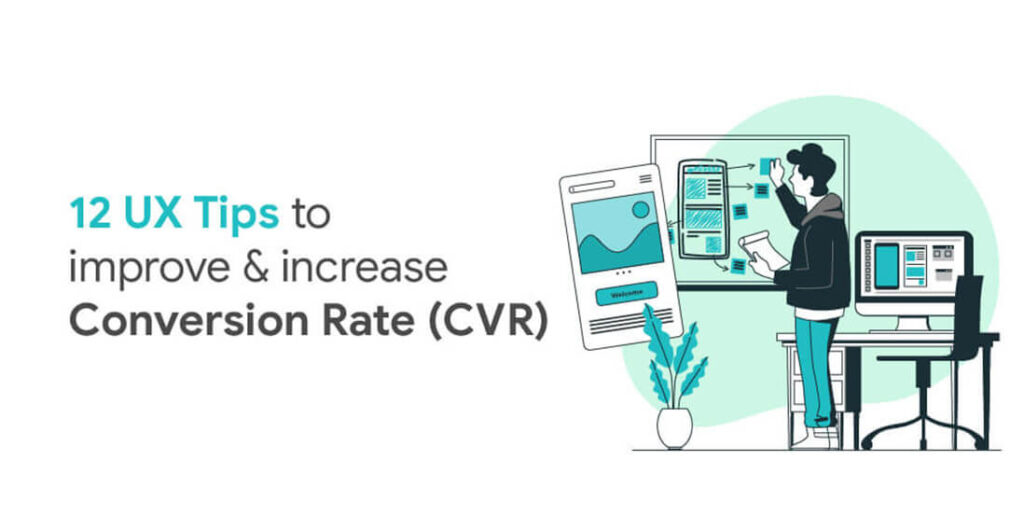
12 UX Tips to Improve & Increase Conversion Rate (CVR)

ï»ż

Good User Experience means a user-friendly interface that ensures that the user reaches their final goal on a website/app or a system with ease. Each little element, however minor, when placed on an interface comes together and plays a role in converting the users. Together all these elements own the user experience of the product.

Following are 12 UX tips that help in improving user experience and further increase conversion rate.

1. CTA (Call To Action) Button Design & Placement

Where you place your call to action greatly influences your customers’ UX. If CTAs are hard to see, read or click, then that has a negative impact on UX and conversions. The goal of many pages is to sell something-whether products, subscriptions, or signups. CTAs are integral to conversions and so is their placement.

There’s a lot of fuss around the internet about the significance of colour when it comes to influencing buyer’s behaviour. It’s commonly believed that green CTA buttons are more effective than red ones because green is usually perceived as ‘go’ and red as ‘stop’. Although there is some truth to this, a brand’s colour scheme definitely influences perception, but when it comes to conversion, colour doesn’t matter as much. What really matters is contrast and visibility.

CTA copy is a vital element of conversion optimization. Companies often forget to pay attention to what their CTA headlines and buttons say. How many times have you seen a button at the bottom of a page that simply says “Submit”? While this may be appropriate in some circumstances, CTA buttons and headlines provide a massive opportunity to increase conversion through a great copy.

Headlines that are particularly effective tend to include words that elicit emotion, create a sense of urgency and demonstrate scarcity. Why? Because a CTA written in this way will make your on-the-fence users (often a majority of your total users) most likely to pull the trigger and convert. When it comes to providing a quality user experience to visitors, call-to-action (CTA) buttons play a major role. Conversion, engagement, business, revenue, and profits of your business solely depend on the call-to-action button you provide throughout your website.

CTA along with specific colours can be a game-changer. Studies prove that CTA buttons with orange, red and green colours are more likely to be clicked by the visitors.

2. Quick Page Load Time

Today, more than ever, site speed is one of the most crucial determining factors in whether your UX is up to par or not.

Sites that are noticeably slower suffer from conversion losses compared to sites that are blazingly fast.

How do you know what’s fast enough, though? A classic study conducted in 2009 by content delivery network provider Akamai and Forrester revealed that 40% of consumers refuse to wait longer than three seconds for a page to render before they abandon the site. If your site takes three-and-a-half or four seconds to load, then poof. Your leads vanish along with your conversions.

A much newer study done in 2016 by DoubleClick by Google confirmed these earlier findings. When it comes to mobile, if pages take longer than three seconds to load, then 53% of mobile site visits are abandoned. Like mentioned earlier, you just have 3-5 seconds to impress a visitor. But if your website takes 10 seconds to load, then obviously, the customer would get frustrated waiting and look for some other site (mostly your competitors).

So, to give a great user experience to your visitors, it’s essential to have a well-optimized website.

3. Use High Quality & Original Photos

Images instantly lift up any webpage and make the content visually appealing. But, the type of your chosen image can make the overall design of the page appear good or bad.

It’s best to stick to this rule - Stay away from stock photos. While it is cheap and extremely easy to use stock photos it does more harm than good.

Stock images might look professional, but, within no time the users would be able to identify stock images and lose interest.

Original photos draw more visitors as they have a realistic approach to them and the user connects with them. Whereas stock images are overused and don’t create an appeal.

One more thing to be kept in mind is that using stock photos sends across a message that you have not invested much effort in designing the website. Also, it doesn’t look unique as they might have already seen it somewhere else.

So, always use authentic images, no matter how basic and simple they might look. Remember to stay away from stock photos

4. Content (Text) Visibility & Optimization

Consider the reality that your leads and visitors don’t actually read much of the copy on your site. According to UX Myths, people usually just skim site content. With short attention spans, it’s crucial that whatever little content they read is actually easy to read and interpret. If your copy isn’t comprehensible enough, they won’t know what to do.

What if I tell you white space or negative space of your website helps you to achieve a great website design. Yes, that’s true! In spite of being one of the most important aspects of website design, it’s still so underrated.

According to research, white space around text and titles increase user attention and provides a better user experience. White spaces make your content more legible and easy to navigate. However, you need to balance the use of white spaces with important information. It is proven that White Space increases click-through rates, as it allows the viewers to read/scan any data on a web page without the background clutter.

Therefore, keeping adequate ‘White Space’ on a website actually generates more leads and improves a merchant site’s conversion rate.

5. Easy and clear steps to check-out

Easy and clear steps to check-out

There’s a lot of debate among CROs on whether single-page or multi-page checkouts are better to convert. The truth is that there is no absolute answer to this question. In some cases, a single-page checkout process works well. In others, a multi-page checkout will do better.

For E-Commerce, it’s mandatory to reduce the steps of the checkout process. Most retailers, however, stick to a multi-page checkout process and never even try to experiment with a single-page alternative.

6. Guest Login works wonders

Guest Login Works Wonders

Your customers today are wary of sharing their private information with your site. They may like your products enough to buy them, but only a few of them would want to create an account and start a relationship with you. Yet, so many e-commerce stores continue to push mandatory sign-ups onto users. This has a disastrous impact on conversion rates since customers would rather skip buying altogether than deal with newsletters, promotional offers, and upsells.

Create a user account automatically when they make a purchase, assign a random password and send the information with the order receipt in their mailbox. Even if users choose not to register, you still want them to buy your products or services.

So do not force a sign-up on the checkout page.

7. Right duration of Animation or Transition

Animation draws the attention of users and it can control where they focus. This is great as long as the user is focusing on the right thing.

Animation at a wrong place and at wrong speed, becomes a distraction front the content. 

When elements change their state or position, the duration of the animation should be slow enough to give users the possibility to notice the change, but at the same time quick enough to not cause waiting.

Among the moving objects of the same size, the first one to stop should be the object that has passed the shortest distance. Small objects in comparison with large objects should be moving slower since they make bigger offsets.

8. Avoid Bouncing and Motion blur effect in Animation

Animation is important because it enables us to tell stories and communicate emotions and ideas in a unique, easy-to-perceived way that both small children and adults can understand. Animation has helped to connect people throughout the world in a way that sometimes writing and live-action films cannot.

When objects collide, the energy of collision must be evenly distributed between them according to physical laws. So, it’s better to exclude the bounce effect. Use it only in exceptional cases when it makes sense.

The movement of the objects should be clear and sharp so do not use motion blur. It is difficult to reproduce the effect even on modern mobile devices and it’s not used in interface animation at all.

9. Use Easing effect instead of linear for animation

Easing helps to make the movement of the object more natural. For the animation to not look mechanical and artificial, the object should move with some acceleration or deceleration - just like all live objects in the physical world

Animation with easing looks more natural compared to the linear one.

10. Proper navigation throughout the site (Sitemap)

A recent online survey revealed that improving a website’s navigation may increase the conversion rate by 18.5%. Your website may stand out amidst the crowd of thousands of other merchant sites catering to similar services/products. However, you may lose a large number of potential clients if they experience difficulty navigating through your website and leave the site.

If your visitors are unable to use the website and navigate around to find what they are looking for; you lose the game and that’s a big NO.

Clean and simple navigation makes it easy for users to quickly locate what they need. So, here’s the idea: Think of what customers would look for on your site most frequently. Then make them visible. When potential customers look for something on your site but find it difficult to locate, they would be frustrated and would go away, probably straight to your competitor’s site.

11. Have Consistent colour palettes according to the branding.

If you’re designing a landing page or any page, you need to restrict your colour palette according to your brand. Too many colours can create a distraction and your user won’t know where to focus and give their attention.

When you limit your colour choice to just one or two but make use of their respective shades and hues, you’ll be able to create a design that is more balanced. As we said, colours are like emotions. Too many colours on a page and you’re going to overwhelm anybody who visits your website.

A good tip, stolen from the world of interior design, is to use the 60-30-10 rule. 60% is your main colour, 30% is your secondary colour and 10% is your accent colour.

It isn’t always the case that your UI colour has to align with the brand identity but it’s a good way to promote consistency in the UX design and improve overall recognizability.

12. Create Autocomplete and Search suggestion functionality

Create Autocomplete and Search suggestion functionality

As users type, does your site search give them drop-down or autocomplete suggestions? These techniques can help your users find relevant search terms as well as reducing the time and key-strokes needed to execute a search. Users love it when the tasks they have to perform are made easier.

Autocomplete search allows users to click on suggestions and be taken directly to search results, thus decreasing the time needed to search.

The instant feedback given by autocompleting can help improve the overall user experience on the site, leading users to find what they need and convert faster.

By producing the keyword suggestions that are known to produce relevant results, the autocomplete feature considerably expands the likelihood of successful searches on the first try.

Lead Generation Form Analysis - Part II

Lead Gen Form Analysis

In my previous blog post, I explained about why it is important to carry out lead gen form analysis and methodology we used to collect the required data. Here I will give a detailed overview on how we carried out the data analysis stepwise. I have also included list of action items that generated ROI for the client.

Data Analysis

Two most important points you must take into account before starting any analysis:

  • Data of sufficient time frame
  • Define important KPIs that can be segregated further to get meaningful insights.

We have defined three KPIs in our case. These KPIs will act as decision making variables that will help us in evaluating the performance of forms.  Here are the KPIs:

  1. Form view to Conversion Rate: It is the ratio of no. of forms  submitted to unique pageviews of that form page
  2. Form Start Rate: It is the ratio of no. of users who started to fill up form vs. no. of users who viewed the form page
  3. Form Conversion Rate: It is the ratio of no. of users who started to fill up form to no. of users who submitted the form.

Our first step was to find out if any correlation exists between avg. page load time, avg. time on page and exit rate vs. the three KPIs. The only observation found was the inverse relation between avg. time on page and form start rate, which means less and less users started to fill the form as page load time increased?

Lead Gen Forms’ Performance

KPIs Values: Lead Gen Form analysisWe carried out analysis at the Macro level by calculating the KPI: form view to conversion rate. In this case we observed this rate as 15% (which means only 15 out of 100 who visited the page, submitted the form). Now moving towards Micro level, we identified 22% form start rate. Next question was how many of them actually submitted the form after starting to fill it. And Form conversion rate for the site was observed to be 80%. These observations gave us clear overview of how users actually interacted with the form.

On digging further, we observed the placement and orientation of forms and checked whether it affected our KPIs or not.

Orientation of Forms vs. KPIs

Orientation vs. Form Start Rate & Form Conversion RateWe observed that when comparing the form start rate, the forms which are right aligned or are on right hand side of the page tend to have 31% form start rate vs. 22% for forms which have central orientation (as shown in Graph 1). It suggests that the general tendency of the user is to start filling forms which are on right hand side on the page.

Moreover, we also found that orientation of the forms affected the form conversion rate. As the forms which were right aligned had 15% higher conversion rate than the ones which were center aligned.

 Placement of the Forms vs. KPIs


To categorize the forms further, we checked how placement of the form affected the KPIs. From the analysis we found that forms which were placed Above the Fold (ATF) have 29% Form Start Rate vs. 3% for the forms below The Fold (BTF) (as shown in Graph 2). This clearly shows that users are not able to identify the form by scrolling down the page.

Effect of Form Length on KPIs

We also looked out for any correlation that may exist between no. of form fields, form start rate & form conversion rate. Start rate for the forms decreased significantly as no. of fields increases which indicates that form length is directly affecting the user’ s decisions (as shown in Graph 3). But on the other hand, form length doesn’t affect the form conversion rate, which is against the common belief that user likes to fill the forms which are shorter.

Analysis of Form Fields

In the next step, we studied the behavior of each form field to identify if certain field causes significant drops and check if optional fields can be removed. And our hypothesis is proved valid when we observe that certain form fields that were causing large exits from the form and that demanded attention & action.

In one form, ‘No. of Employees’ field had caused a drop-off of 20% (whopping! isn’t it??). It means, 20 out of every 100 visitors were abandoning the form after reaching this field. The same field in another form caused a drop off of 11%. This clearly shows that there is an issue with this field due to which user are abandoning the forms.

Looking at the data of the forms, we also find that presence of the side bar links on the form pages cause severe distraction as approx. 30% of users abandoned the form pages by clicking on sidebar links.  This is an important observation as site owners tend to put many links on the form pages without knowing its implications.

Assigning $ values to lead submission

This analysis brought forth some important observations. But what about economic impact this analysis generates? Simple insights and data points are not sufficient to convince any stake holder in terms of how much revenue benefit the analytics will generate. The most important aspect of any this analysis is that it should generate significant ROI for the client.  So, in this analysis we assigned lead values to each form based on its impact on the business. We used this lead values to calculate revenue benefits that were generated from each form submission and found the revenue leakage due to form field abandonment. By this way, we can directly attribute our observations with the revenue loss incurred.

For e.g.: For one form, 2500 visitors started form filling and 2100 visitors submitted the form. With the lead value of the form being $1000, revenue leakage due to 400 abandons resulted in $400,000 loss (Shocking!!). This is just for one form and when we calculated the same for all forms, we found revenue leakage caused due to form abandonment in Thousands of Dollars(Just Imagine!!) and how much revenue leakage can be contained from the analysis will help generate ROI.

Action Items from Analysis:

From this analysis, it appears that there are lots of opportunities where we can contain revenue leakage that occurs due to drop of visitors from the lead gen forms. The most important action items we get from the analysis is developing several ideas for A/B tests based on the observations. To generate test ideas we also took into account the best practices for form field. Some of these are:

  • Changing the placement and orientation of the forms
  • Removing the forms fields which are causing extra ordinary drop offs
  • Changing the input method of fields
  • Removing the sidebar links from the form pages
  • Removing the top menu from the form pages
  • Keeping the name of the form field above it

Another action item that was derived from the analysis was the creation of Re-marketing list of the users who had abandoned the form after starting to fill it.

This analysis proved to be very insightful and it will continue to do so due to the sheer impact it can cause on revenue. I hope this blog post can help you in carrying out analysis on your own.

Do you want us to carry out similar analysis on your website? Get in touch with us.

Lead Generation form Analysis Guide using Google Analytics

leads in GA

leads in GA

If you are in B2B business the best way to check the performance of your site is to check how many leads it generates. But it is not at all easy for any lead gen sites to convert visitors in to leads and get business. To attract more visitors and generate potential leads you invest heavily in the appearance of your website, hire best developers and use best web site technologies. And still, you find that you are not generating enough leads to grow your business. Its because sometimes business owners ignore one very important part of the web site, which is lead gen forms. Lead gen forms are one of the prime way to grow your business. That’s why as a B2B site owner, it is imperative to check the performance of the lead gen forms.

Pic1

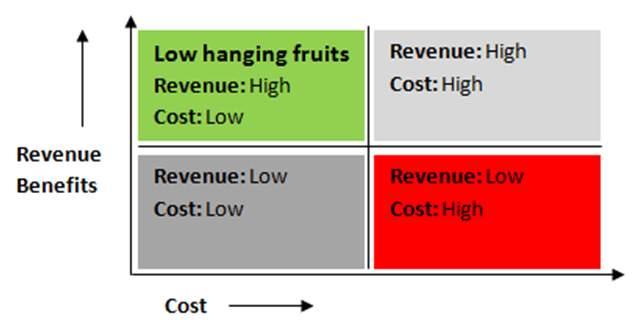
Another reason why it is advisable to check the performance of forms and fix the issues is that leads gen forms are ‘Low hanging fruits’ for the business. ‘Low hanging fruits’ are those opportunities for business where you achieve high ROI without incurring much cost. Lead gens forms belong to this category due to the impact it can cause on the revenue. Benefits derived from optimization of forms can yield great financial benefits to the business as it can directly impact the no. of leads submitted. But question is how to check the performance of the forms using form field analysis.

In this blog post i am sharing with you one interesting case study of the lead gen forms’ analysis that we have carried out for one of our client. I will now try to to lay down the road map in a simple and systematic manner so that it will become easier to understand and execute as well. I hope that this blog post will give you a clear idea on how to check the performance of your lead gen forms.

Objective of the analysis

Our objective behind carrying out this analysis is to identify if there are any anomalies in forms fields or forms positioning that is leading to extra-ordinary drop-off rate during the form filling process. Along with it we also want to understand whether it is required to restructure the order of certain set of forms to have them understandable & easy to navigate to ensure higher form fill up rate.

Data collection/Methodology

To carry out any analysis it is utmost important to gather right data. It was not possible for us to get the data required to carry out this analysis in GA so we implemented advanced tracking mechanism to track all the necessary data points. Implementation of tracking was easier for us as we already had GTM implemented on the client’s site. GTM made all the tagging easier. If you wish to carry out this analysis after reading this blog post, I would strongly suggest you to implement GTM as it will make your dev. team’s life much smoother. (Here is a blog post on why I love GTM)

Now, since GTM was implemented, we customized JavaScript to track different steps (fields of forms) using virtual page views in Google Analytics. Virtual Pageviews get fired whenever user completes any field and moves to the next field or perform any other action. This implementation ensures that we track the interaction of user with each form field.

pic2

Using virtual page views, we built different funnels for each form to learn the number of users starting the funnel & understanding users’ abandonment at different forms fields. We created funnel goal for each form and ensured that funnel steps match the sequence of fields in the form. It ensures that we track the user flow from the first field of the form to form submission. One example of such funnel is shown here. This funnel shows the no. of users abandoned the form from each field. In this figure, the steps of the funnel describes the name of the form fields and no. on the RHS describes no. of users who abandoned the form from each field.

We also collected data of form positioning on different pages, no. of fields in forms, no. of errors occurring while filling the form, no. of visits distracted towards form sidebar links.

At the page level we considered Pageviews, Avg. page load time, avg. time on page and exit rate as primary set of dimensions and metrics which give us clear idea on the form pages.

So this was about what data points needs to be collected to carry out this analysis. I have divided this blog post in to two parts. In the second part, I will explain about how we carried out data analysis and set of action items that has generated from this analysis.

(Part 2: Lead gen form Analysis using Google Analytics)


Ruling the 3 seconds rule for improving usability of your website

mproving usability of your website

mproving usability of your website


What’s this 3 seconds rule for web?

Just Google it and you’ll get plenty of blog posts about it.

Basically, it matches with the 5 seconds rule for food. The way a dropped food is considered stale after 5 seconds, it happens for a new user on any website. Studies say that a new user spends only 3 seconds on a site to find what he wants, and hops on to another. Obviously no site wants to be the one. You can achieve this by improving usability of your page/website.

From Google, you’ll get a lot of tips for achieving this. But it’s important to know the methodology to get the page ready for 3 seconds rule. I will get in to why these tips are important and good practices for them.

Speed, the first and the best

There’s no reason why a new user will stay on a page if it takes beyond 3 seconds to load. You’ve got just 3, the more you save, the more convincing you can do. Improving usability is not limited to changing the design. While designing or re-designing, make sure that your page is on diet!

Focus on the first fold, it can make it, or break it!

The user will make his first decision to stay on the site by seeing whatever he can on his screen without scrolling down. The first fold is the only place to justify those 3 seconds. Other things work to keep the user on the page for more time towards the sale or conversion.

In the first fold:

Now, let’s talk about things to take care of in the first fold.

  1. Pleasant design

    After landing on the page, looks is the first thing to create interest. Visuals talk better than words. A cool looking and (especially) working design builds a trust in user’s mind that there’s a good company behind this website. Would you buy a Rolex watch from a hawker? Vibrant colors, big fonts, neat & clean layout, and optimum usage of white space are things to take care of while designing. Here’s a design I liked while surfing randomly today:

betternow

What’s in it for me factor

This question is there in every user’s mind from the moment he gets on a page. This question can be answered via many elements. e.g., tagline, headline, main communication, an enticing banner or just a logo, or by all of them. The list is below:

  1. Clear messaging
  • Prominent logo - The company logo is the identity. It has to be the first thing to be seen on the page. A well-designed and prominent logo tells a story.
  • Simple and crisp tagline - Sometimes, an intuitive tagline is enough to keep the user glued for more stuff. Check this tagline from Zendesk. The moment you land on the page and locate the logo, you see the purpose of the website right there.
  • Easy to understand headline - Headlines are great things to extend the tagline. Sometimes, it does the job of tagline as well. It can be a one-liner, or max. 2. 37signals does this job perfectly. It doesn’t need the tagline with this communication:

  1. Main communication

    This element communicates website’s business. This can either be the headline itself, or a good looking banner with 2-3 lines.

    Checkout a clear headline which works as tagline/headline/what’s in it for me factor.

  1. What does it offer

    You can either talk about the benefits first as the what’s in it for me factor, then explain product features, or directly explain the product as what’s in it for me factor.

    The page for iPhone communicates both points 4 & 5 above together, smartly with big product images. The product has such strong features, that it’s enough to get clicks.

  1. Call to action

    A great call-to-action does the job of extending those 3 seconds directly towards sale/conversion. If your call-to-action on the page is something like “Go” or “Submit”, then it’s better to have no call-to-action. An abstract call-to-action is a strict no. It’s not just a button; it should be used to explain what’s inside.

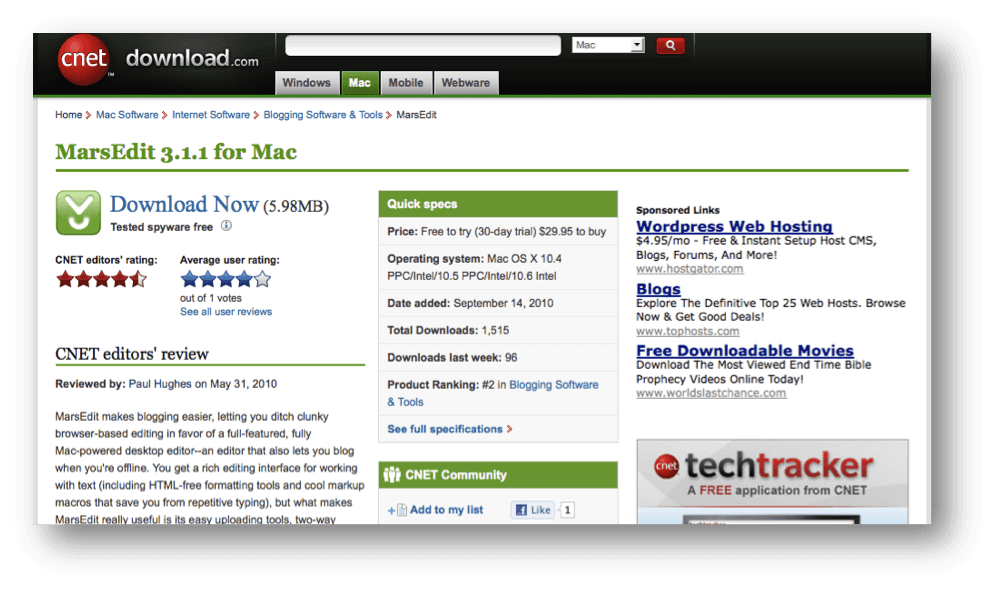
See the above design. Call-to-action is the brightest thing on the page, with “Free Download” message and OS requirements.

Just take care of these tips to make the user stay for more or perform an action. Yes, it’s important to follow other tips but the thing above should be on priority to beat the 3 seconds rule.

Beyond 3 seconds

After those 3 seconds, these are the things to take care of to get the user to start the shopping process, know more about the service, or at least stick for more time and come back again.

  • Building trust - After earning some trust in 3 seconds, it’s time to build it by these elements:
    • Testimonials
    • Product features
    • Celeb quotes
    • Social proof
  • Next steps - Now get the user to do more by serving more material to perform next actions towards the sale:
      • How it works
      • Why…
      • Pricing plans

Improving usability should be a primary thing for all website owners before spending in ad campaigns to get more visits. It’s great to generate thousands of ad clicks to the page/website, but even 1% improvement in conversion rate or bounce rate can save a lot of money to buy more visits!

Testing Landing Pages, The best way to increase Conversion rate

cnet
Are you testing your landing pages? It’s the best way to increase conversion rate and understand user behavior. This post takes on basics of A/B testing. After reading, you can contact us for a Free A/B Test campaign.

Is your Landing page really doing good? can it be better?

You must have heard someone saying, “wow, that’s an awesome Landing Page.” How awesome? Are you sure that the conversion rate you are getting on your current Landing page is the best? Are you carrying any A/B testing on  it? No? Then I doubt how do you say that.

On Internet, the same user changes his behavior from one web site to other. I might look for girls on Facebook with the purpose of dating, but i won’t do that on Linked in. I’ll become a serious guy in the latter, even if the same girl is there on both the sites. You can either change your site according to the user behavior or change the user behavior as per your site. The latter is very challenging but gives rewards.

e.g. On facebook, every 15 days you see a change, may be profile updates are changed in to news feeds. you don’t question it and change the way you surf facebook and remember it next time. ofcourse the changes are made keeping user in mind, but they tend you to change your behavior.

e.g. while on gmail, they knew that people have a lot of junk mails which don’t go to Spam folder, so they introduced Priority Inbox.

In both the cases, users are happy. It depends on which way you want to chose.

Any way you chose, but to see whether users are behaving the way you want them to, you’ve got to test your pages. Test your pages with variations.

How it  works?

in A/B tests, 2 versions of the same page are tested among 2 groups of users at the same time. All your users are split in two on random basis and are served the page they are selected to see. When they perform an action and land on a conversion page, it forms a conversion. It’s necessary to have only one conversion page for all version you are testing. A conversion page is normally a Thank you page for authenticating the action just performed. A conversion here can be just a click, or download, or a form fill.

How many pages can I execute A/B test at once?

Test 2 pages or 10, up to you. The thumb rule is  “the lesser pages you test, the quicker results you get”. Sites with huge traffic might see results in a few days.


These are the variations you should test:


Call to actions


Free download

Call to action can be a Text or a Button. Anything that tells a user to do something is a call to action. These are the things you should test in call to actions:

- Text - Test text variations.

e.g., “Buy now” vs “Add to cart”, “Free Download” vs “Get it free”, “Fill up this form” vs “Register here”

- Buttons colors

Some colors attract users more. But it depends on the background to foreground combination. Also depends on the Target Audience. Red button on a Travel site might not do well. But it might do great on a Music site.

e.g, red vs yellow

- Buttons and text - See if Buttons or Text is performing better.

A/B Testing for Sign up Forms

A/B Testing - Twitter

Form is the second most important thing on a Landing Page. It gets you more Form fills just a small change.
- Position - Change the position. Test Left vs Right, Horizontal vs vertical.

- Split - If you have a long form, Try splitting a log form in to 2-3 steps and justify each step. Then test Normal vs Split.

- Size - Drop some fields you think are not so important and can keep users from filling in. Try removing any “not so important fields”. Test Long vs Short.

A/B Testing for Header text

A/B Testing Sharekhan

Header does a very good job grabbing users attention. Always keep the header simple, descriptive and as short as possible.

Test different text in the header. e.g. “Great deals on Movie tickets” vs “Cheapest movie tickets in town”, “Great articles on Google analytics” vs “Google analytics at its best”

A/B Tests for Images / Banners

A/B Tests - Jet

Images are very easy to engage users. Sometimes, it helps convert more with a minor change in communication or call to action.

- Image size - it might happen that a smaller image with some breathing space might increase clicks by a good number. Sometimes, a bigger image can bring more users. Test sizes.

e.g., Small vs Big, Horizontal vs Vertical,

- Communication / Call to action - The call to action can be tested same as described above. The communication can be tested for variations of influential lines.

e.g., “Tack visits easily” vs “The best way to track visits”, “Great shirts at great prices” vs “Best deals on shirts in town”

It’s not necessary to test all the features of an object. Test one at a time. For testing features of call to action, test Text first, then test Button colors, and then Buttons and Text.

What types of Pages can be tested?

Any page where some action from the user is required. Here are examples:

Download page

cnet

A download page for software, articles, books, videos or photos.

What content to executing A/B test on :

Call to actions

Position of the button

Images if any. if there’s no image, try putting one.

A/B test on Lead generation page

mailchimp


Sign up page with a form for a website or free trial for a product. Or A lead generation page for a product trial or a bank account.

What to test:

Button

Header of the form, Position and size

Images


Product page

ipod

Page for a particular product display. Or a multiple product page. e.g., A T-shirt or an MP3 player.

What to test:

Button

Call to action

Images

Likewise, there can be many other pages and Variation you can test. But most important, Please test.

A/B Testing Tools

The most widely used tool is Google web optimizer. It’s free. There are other Free and Paid tools available, but when Google does the best job, why go anywhere else. However, for paid tools you can learn our review on new A/b Test tools.

We at tatvic are specialized in Conversion rate optimization projects and A/B test is our love. And to spread the love, we are offering 3 FREE A/B tests a month. You can be the lucky one to grab one. Doesn’t matter even if you test your pages, there’s no harm in trying for free. If you have never test your pages, then you have no right to wait,

Register for a FREE A/B test now!


Happy Testing!

How do you pass your online discounts

Recently, one of our e-commerce client requested that he would want to pass on few discounts in order to increase the revenue. We didn’t really had lot of time to analyze the market and plan what to offer and he already had something to offer in his mind. Then she was going to just put it on its website and doh done !!

at 1 AM morning here in India , we requested client to wait for 2 more hours before putting the offer into production. We just looked at google analytics for first hour, luckily we had set up google analytics very nicely for them. We found that

  1. The visits that coverts were mostly from returning visitors.
  2. The visits that converts were mostly between 2 PM to 10 PM on the local time.

That’s it pretty simple with google analytics and its advance segment features. So what happened after-wards ? See here is what we got. really nothing fancy , just a 5 grader !

We requested client to shed the offer budget by 30% and put it in buying some more traffic from Pay per click campaigns. We also wrote a quick piece of code which will only display offers/discounts between these hours and that’s it. It did not take really long.

The entire work got done at about 6 AM here in Bangalore and boh we were good. About 4 hours.

What are the results ??

  1. The campaigns brought about 10% more visits to the website
  2. The conversion rate dipped a little but it was offset by extra visits that we bought from PPC
  3. The net profit from this entire operation was about double the similar offer that they had ran earlier. In quantity it matched about $3500 of net benefit in 4 hours !! Whoppa !!

Thats the game ! more than money , it gives immense pleasure to see such results.

Guys, if you are really providing any discounts and offers please do check for the such things.Because, you do have consumers in the market who are willing to pay for your products/services happily. You only want to offer discounts to the guys who are sitting on the sidelines.

If it takes 4 hours to us to get such a great results, even if it takes about a day to do it, I guess its more than worth it.

Have you done such analysis in past ? can you try now ?

Bot Icon
Bot Icon

Tatvic Bot

Explore About Tatvic and Services